 Brandon Karpf
The $1,000 Quote and the $50 Fix
Published on
5-minute read · 1,222 words
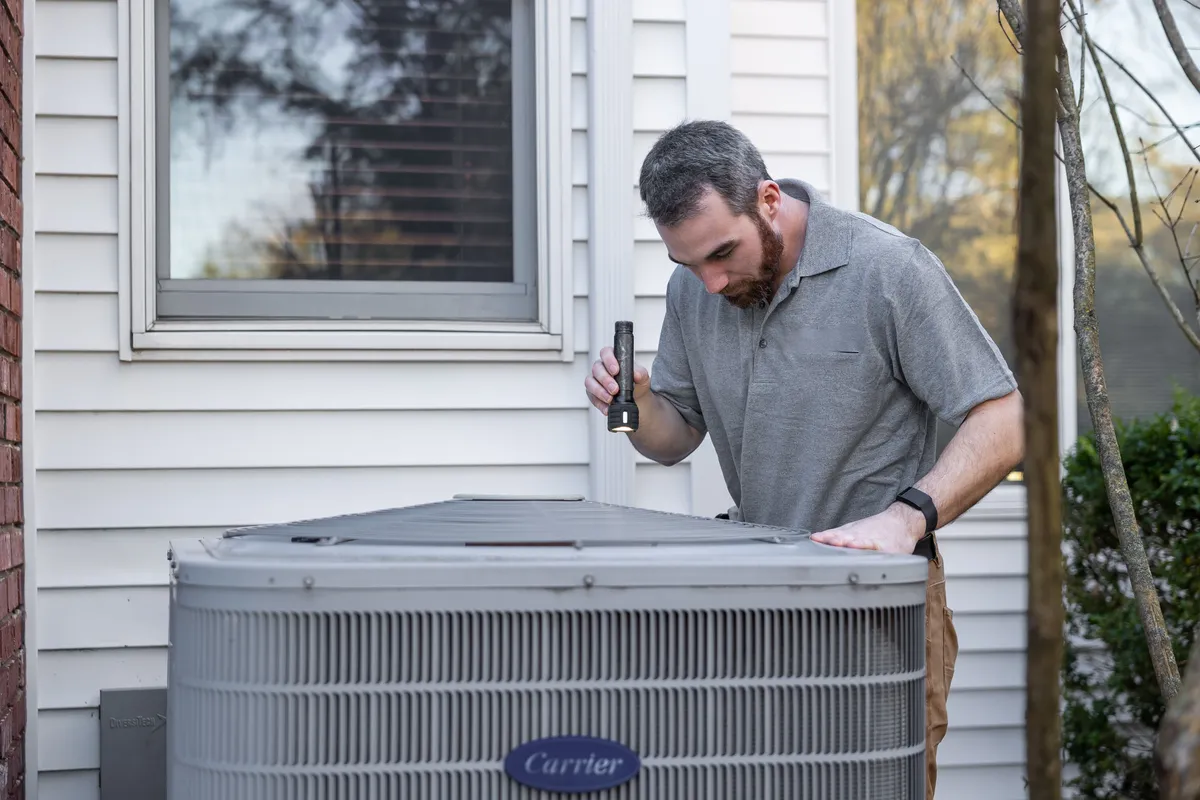
A guy stood in my basement last month and told me, with a straight face, that two light bulbs would cost a thousand dollars.
Ultraviolet bulbs that sit in the air handler and keep the coil from turning into a petri dish, so, granted, not your standard 60 watt equivalent ceiling lights. But still. He wrote “$1,000” on his iPad, spun it around, and gave me the look. The look that says, “I know, buddy, but what are you gonna do?”
I’ll tell you what I did. Absolutely nothing.
I said thanks, I’ll think about it, and I walked him to the door. Arguing with a man who holds all the information while you hold none is how you end up paying twelve hundred.
Then I went upstairs and asked Claude:
“Twenty-five bucks a bulb, here’s the exact part for your unit. No, you can’t electrocute yourself, the thing runs on about the voltage of a desk lamp. Four steps, one screwdriver, go ahead and clean the housing while you have it out.”
The bulbs showed up two days later in a box smaller than a paperback, riding in next to an Amazon box that actually contained a paperback. I had them in before the coffee finished brewing. Fifty dollars. He’d quoted a thousand.
The guy was not a crook. He quoted me the going rate, and the going rate for two bulbs is a thousand dollars because the going rate assumes I have no clue what’s behind the panel, which is entirely true. It also assumes I’m too nervous to look, which is not true.
Fifty bucks was parts. The other nine hundred and fifty was a charge for my ignorance, and I’ve been paying that charge my whole life. You probably have too. We just never saw the line itemized because the line item was “customer is too uninformed and anxious to do it themselves.” Plus, we’ve never had the collected knowledge of humanity plus a good portion of its reasoning skills sitting at our fingertips, ready at our beck and call.
The cheap stuff carries the fattest markups: a wiper blade, a fuse, a bulb, one of those plastic clips that holds your bumper on: 150, 200, 300 percent. A two-thousand-dollar transmission? Twenty percent, max. That’s backwards if you think the markup pays for the part. It pays for information asymmetry. Until large language models, our ignorance was the entire business model and because everyone is so breathlessly obsessed with how AI will change white collar jobs, they still think their business model is sound. They haven’t yet realized that they’re well and truly fucked.
A man named George Akerlof won a Nobel Prize for giving this a name. In 1970 he published the paper they teach in every econ program, “The Market for Lemons,” and the whole thing runs on what happens when the seller knows more than the buyer. Spoiler: the buyer gets hosed. Akerlof listed the cures as inspection, a warranty, some kind of certification, anything that hands the buyer the information he’s missing.
For half a century those cures were slow and expensive and required knowing a guy or driving to a Barnes & Noble to buy the “HVAC Ultraviolet Lighting Systems for Dummies” guide and then actually reading it. But nowadays, one of Akerlof’s latest cures costs twenty dollars a month and answers before you finish the question, including a helpful unsolicited aside that you should go ahead and clean the damn thing while you have it taken apart.
Which is terrible news for the AC repairman and places like car dealerships, even though the dealership is still out there humming along, blissfully unaware.
Walk onto a car lot and the whole show is the shiny row out front, the new metal, the balloons. But that is not where dealers make their money. Service and parts, the garage around back that nobody photographs, throws off close to half of a typical dealership’s gross profit. The showroom is the theater and the service bay pays the mortgage.
I tested the service-bay theory myself on the Star Destroyer.
That’s my car. A 2019 Civic hatchback, grey, with red LED accents because I have, at heart, the taste of a fourteen-year-old boy, and which I have personally driven across this country and back twice. The Honda dealer last week wanted three hundred sixty-eight dollars and fifty cents to swap two fog lights and a side marker. The three lights cost thirty-five dollars on the internet, shipping included. I put them in on a Sunday in the driveway with Claude sourcing parts and babysitting the install. The Star Destroyer has never looked meaner, and the dealer never got the call.
Before you go ripping your own furnace apart, the AI machine is sometimes confidently, spectacularly wrong. People have handed a chatbot a weird engine noise and gotten back a gorgeous, articulate list of five possible causes, zero of them correct. It can’t hear the knock. It can’t read the codes. It can’t feel the wheel pull left at sixty. And plenty of jobs still need a lift, a torque wrench, and twenty years of hands that have done the thing a thousand times. The markup on those jobs is honest because the danger is honest.
To me, the markup only deserves to live where being wrong can kill you and nowhere else: gas lines, brakes, anything holding up your house or your axle. The premium for welding a gas fitting is real, and I will pay it gladly and tip on top. The premium for me not knowing the gas fitting was fine all along (a two hundred dollar visit fee just to check) deserves extinction. Same invoice, two different charges, and AI has rightfully and permanently torched one of them.
Which should be a happy ending, and mostly it is. The customer wins. The honest tradesman selling skill instead of mystery wins too because now you can finally tell him apart from the guy selling fog. The ignorance tax goes back in your pocket. I am in favor of every bit of this. I did it twice in one month and will continue to do it every time there’s a house project or car project or lawn project or you get the point. It more than pays for my monthly subscription to Claude.
But I keep snagging on one thing.
That fat markup on the easy jobs was paying for something. It is how a shop carries an apprentice, how it eats the cost of some nineteen-year-old who is slow and breaks things for two years until the morning he isn’t and doesn’t. And we are about to need that nineteen-year-old like oxygen. The country is staring down something like 2.1 million skilled-trades jobs going unfilled by 2030, with roughly two kids walking in the door for every five tradesmen walking out to retire. The ignorance tax I am so proud of beating turns out to have been the thing quietly funding the only people on earth who can actually lift the water heater.
So I saved nine hundred and fifty bucks, and I would do it again tonight, and I will. The tax was a scam. It was also, it turns out, the tuition.
We are about to find out what happens when nobody pays it.
More writing
Related writing
Three pieces tagged the same.
9-minute read
The AI Has Eaten the Pen
AI writing is intellectual junk food. It's sterile, mediocre, and timid. This is an analysis of the 'Nine Ringwraiths' of synthetic text and how to fight back.

11-minute read
The Backup Was Always a Clock
Navigation was always a timekeeping problem. GPS just hid it, and the hiding is failing.

4-minute read
Everybody's Racing to Orbit. Nobody's Funding the Radio.
A single GPU needs a fire hydrant of bandwidth to reach its neighbor. The best satellite link flying today is a garden hose.