 Brandon Karpf
The Quiet Rearmament
Published on
At 3,611 words, this post will take 14 minutes to read.
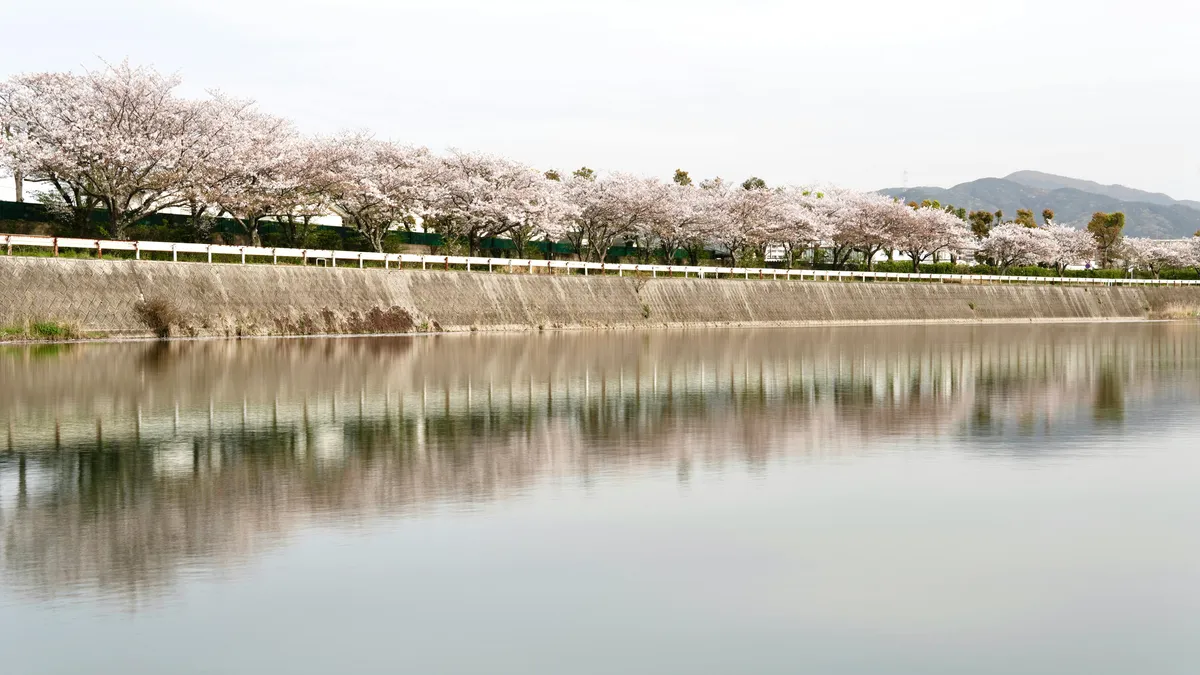
April 1, 2026. Japan’s fiscal year turns over. The cherry blossoms are a week from peak in Tokyo, maybe two in Kumamoto. Bureaucrats file paperwork. Budgets reset. And somewhere inside the Ministry of Defense, an independent oversight commission stands up for the first time to authorize offensive cyber operations against foreign adversaries.
The day before, at Camp Kengun in Kumamoto, the Ground Self-Defense Force activated upgraded Type-12 missiles with a range of 1,000 kilometers. Built by Mitsubishi Heavy Industries. Deployed a year ahead of schedule. From the Ryukyu Islands, where additional batteries will go by 2028, those missiles put all of North Korea, China’s entire eastern coastline, and all of Taiwan within reach. The PLA Daily, not exactly given to understatement, called it a “multilayered offensive kill network.”
Four days before that, the destroyer JS Chokai completed modifications at Naval Base San Diego to fire Tomahawk cruise missiles, Block IV and V variants, at targets 1,600 kilometers away. First Japanese warship with such an overt offensive capability since 1945. She is one of eight Aegis destroyers that will carry the 400 Tomahawks Japan purchased from the United States for $2.35 billion. Live fire is scheduled for August.
A week before, the Maritime Self-Defense Force completed its most sweeping organizational restructuring since 1954, consolidating the fleet around three surface warfare groups and standing up commands for amphibious warfare and information warfare.
Every week, something else. Feeling the momentum yet?
Five weeks before the MSDF restructure, Prime Minister Sanae Takaichi’s Liberal Democratic Party won 316 of 465 seats in the lower house. The first single-party supermajority since the Second World War. Enough to propose amending Article 9, the constitutional clause that has technically forbidden Japan from maintaining “armed forces with war potential” for 79 years. She pledged a national referendum “as soon as possible.”
Twelve weeks before that, Japan’s cabinet approved a $58 billion defense budget, the twelfth consecutive record, pushing the country past 2% of GDP two years ahead of the previous government’s timeline. By the time the five-year buildup program completes in 2027, Japan will be the world’s third-largest military spender after the United States and China.
I wrote about Japan twice in the past six months. The first time, in “The Impossible Seat,” I described a country trapped between its security guarantor and its energy supply, watching the United States set fire to the neighborhood while Japan’s defense model failed in real time. I wrote that Takaichi was “quietly building her own fire department.” The second time, in “The Gardens of Kyoto,” I walked through four gardens and found a cultural DNA that explains how Japan builds anything: with total commitment, generational patience, and a precision that looks effortless until you realize every stone was placed by hand. I wrote about a woman at Ryoan-ji with a bamboo rake and rubber boots, raking gravel at dawn because the work doesn’t need an audience. It needs dedication.
The fire department is open for business. And it was built the same way Japan likes to garden.
The Quiet Is The Point
In February 2022, three days after Russia invaded Ukraine, German Chancellor Olaf Scholz stood before the Bundestag and announced the Zeitenwende. Turning point. A hundred billion euro special fund for the Bundeswehr. Headlines in every language. Four years later, German defense procurement remains tangled in the same bureaucratic undergrowth that entangled it before the speech. The Bundeswehr still can’t field sufficient ammunition for more than a few days of high-intensity combat. The turning point turned very slowly.
Japan made no speech. Held no press conference. Coined no term.
The Type-12 deployed a year ahead of schedule. The 2% GDP defense target landed two years early. The Chokai Tomahawk integration hit its timeline. The MSDF reorganized on time. When the Diplomat wrote up the naval restructuring in February, it ran under the headline “From 4 Flotillas to 3.” Accurate. Also the most aggressively boring headline for the most significant reorganization of a major Pacific navy in seven decades.
The quiet is the strategy. Every garden I walked through in Kyoto operated on the same principle. Precision so total that your brain fills in depth the designers never built. The gardeners who achieved this worked for 170 years. Nobody held a press conference about the sightlines.
Japan rearms the way it gardens. Branch by branch. Stone by stone. Budget line item by budget line item.
And if you’re looking for the Zeitenwende, for the dramatic announcement, for the moment some leader stands at a podium and declares the old era finished, you will miss the entire thing. Because the old era has been ending for three years, and the new one opened for business on a Tuesday in April, filed under fiscal year paperwork and cherry blossoms.
What’s Actually Being Built
Let me stack the capability, because the individual pieces have been reported and none of them have been assembled.
Offensive strike. The Type-12 gives Japan land-based missile reach of 1,000 kilometers from domestic soil. The Tomahawk, once it’s on all eight Aegis destroyers, adds ship-launched precision strike at 1,600 kilometers. Hypersonic glide vehicles are scheduled for deployment in Hokkaido and Miyazaki by March 2028. The Mitsubishi-built Type-12 is a domestic product. The Tomahawk is American. The hypersonics are Japanese. Together, they give the SDF the ability to hit targets across northeast Asia without moving anything off Japanese territory. The PLA Daily’s “kill network” framing is alarmist, sure. It’s also not wrong.
Offensive cyber. The Active Cyber Defense law, enacted May 2025, gives the SDF and the National Police Agency authority to infiltrate and neutralize hostile servers before an attack hits. The oversight commission that stood up on April 1 provides prior authorization. The International Institute for Strategic Studies still ranks Japan as a third-tier cyber power, somewhere between aspiration and capability. October 1, 2026, is the date Japan’s government decided to close that gap. The SDF and police will be authorized to “attack and disable” infrastructure used for cyberattacks, with the government interpreting Article 9 to permit it. Eight months from aspiration to authorization.
Naval restructuring. The MSDF dissolved the Fleet Escort Force, which had existed since 1961, and replaced it with the Fleet Surface Force built around three surface warfare groups. JS Izumo and JS Kaga, the two helicopter carriers that everyone pretends aren’t light aircraft carriers, anchor two of the three groups. A new Amphibious and Mine Warfare Group operates out of Sasebo. And the Information Warfare Command consolidates intelligence, cyber, and oceanographic operations into a single command reporting directly to the Minister of Defense. This is a navy reorganizing itself for offensive operations and joint warfare. The terminology still says “self-defense.” The architecture says something different.
If this organizational chart looks familiar, trust your gut. I served on USS Boxer, flagship of an Amphibious Ready Group based in San Diego. The Information Warfare Commander (an emerging concept at the time) sat two hatches away from the Combat Information Center, pulling intelligence, surveillance, reconnaissance, oceanography, and cyber into a single operational feed. That architecture was bleeding-edge for the US Navy a decade ago. Japan just restructured its entire fleet around it. You don’t adopt your ally’s exact command structure unless you plan to plug into it. Japan’s MSDF is preparing for fully integrated Allied operations.
Missile defense coproduction. The United States and Japan agreed to quadruple SM-3 Block IIA production from 24 to roughly 100 missiles per year. Raytheon and Mitsubishi Heavy Industries share the manufacturing. Japan builds key components; the US handles integration. Japan becomes both a consumer and a producer of the most advanced ballistic missile defense interceptor in the Western Pacific.
Defense exports. The LDP-JIP coalition submitted a proposal in March to eliminate the restriction limiting Japanese defense exports to five nonlethal categories: rescue, transport, reconnaissance, surveillance, minesweeping. The new framework allows export of lethal weapons (warships, fighter jets) to 17 partner nations with defense transfer agreements. A country that has not exported a weapon since the postwar arms export ban is about to sell them to its allies across the region.
Sixth-generation fighter. The Global Combat Air Programme with the UK and Italy targets first operational aircraft by 2035. Japan fast-tracked export rule changes specifically to enable third-party sales of the GCAP fighter. Mitsubishi Heavy Industries leads the Japanese consortium. This is a 20-year bet on Japan as a defense aerospace power.
Ground-based intermediate range. In September 2025, the US Army deployed the Typhon mid-range missile system to MCAS Iwakuni for exercises. Typhon fires Tomahawk cruise missiles and SM-6 interceptors. From Iwakuni, the Tomahawk range covers the East China Sea and portions of the Chinese coastline. The deployment was temporary. The capability it demonstrated was not.
That all happened in six months.
The Wintering Sakura
Cherry trees in Japan spend months looking dead. Bare branches, grey bark, no visible sign that anything is happening inside the wood. A tourist arriving in January would walk past a sakura grove and see nothing worth photographing. But the tree is not dormant. It is accumulating. Cold hours trigger the biochemical process that prepares the bloom. The winter is not wasted time. The winter is the work.
Japan’s economy spent 30 years in winter. Every business journalist who has ever filed a dateline from Tokyo has written that story: the Lost Decades, the deflation trap, the demographic cliff, the zombie banks, the aging workforce, the monetary policy experiments that produced graphs and not growth. Abenomics tried stimulus. Kishida tried “new capitalism.” Nothing produced the spring that everyone kept predicting.
Now $275 billion is flowing into the Japanese economy over five years, and almost nobody is talking about it as economic policy. They’re talking about it as defense.
Japan’s five-year buildup program allocates 43 trillion yen across fiscal years 2023 through 2027. The security analysts see missiles. I see capital expenditure on a scale Japan has not attempted since MITI was picking industrial winners in the 1970s. That money flows somewhere. It flows into Mitsubishi Heavy Industries, which builds the Type-12 missiles, the SM-3 interceptor components, the GCAP fighter airframe, and the next generation of SDF equipment. It flows into the hundreds of subcontractors feeding those programs: precision machining shops, advanced materials suppliers, semiconductor-adjacent electronics firms, software integration houses, robotics manufacturing and programming. It flows into workforce development, because you cannot quadruple missile production without training the people who build them.
The GCAP program alone commits engineers across three countries to two decades of aerospace R&D. The SM-3 coproduction deal turns Japanese factories into production lines for the most advanced ballistic missile interceptor in the Pacific. The Type-12 is designed, built, tested, and deployed entirely by Japanese industry. And the defense export relaxation, once finalized, opens a revenue stream Japan hasn’t had since the postwar export ban.
Turns out the stimulus package it needed might be a Tomahawk.
That line sounds glib. It is glib. But the underlying arithmetic is serious. The United States built its postwar industrial dominance on defense spending. The aerospace sector, the semiconductor industry, the internet itself: all downstream of military R&D budgets that created capability and commercialized it. South Korea’s defense-industrial complex employs over 100,000 people and exports $17 billion in weapons annually. Israel’s Unit 8200 alumni seeded the cybersecurity and tech startup ecosystem that now accounts for a meaningful share of GDP. Defense spending, directed at domestic industry with export ambitions, is industrial policy wearing a uniform.
Japan is walking the same path. And the 30 years of economic winter make the potential bloom larger, not smaller. The country has a highly educated workforce, world-class precision manufacturing, deep engineering talent, and a corporate sector that has been conserving cash for decades. Mitsubishi Heavy Industries, IHI Corporation, Kawasaki Heavy Industries, Subaru (which builds Apache helicopter fuselages, a fact I genuinely enjoy): these companies have the capacity. They lacked the demand signal. The five-year buildup program is a $275 billion demand signal.
Takaichi’s government funds the buildup through corporate and tobacco tax increases already in effect, with income tax increases beginning in 2027. Japanese taxpayers are paying for this. The 55-56% public approval for Takaichi’s defense posture exists now, in polls, in the abstract. Whether it survives the tax bills arriving in household mailboxes is a question for fiscal year 2028. Approval for rearmament in principle and approval for the invoice are different conversations.
But the capital is already flowing. And capital that flows into high-skilled domestic manufacturing, into coproduction agreements that give Japanese industry a permanent seat in the global defense supply chain, into a sixth-generation fighter program that commits Mitsubishi to decades of work. That capital does more than build weapons. It builds an industrial base Japan has not had since the 1980s, when the country’s manufacturing prowess was so formidable it made Americans buy Chryslers out of patriotic anxiety.
The sakura blooms because the cold hours accumulated, the energy stored, and the conditions aligned. Japan’s economic winter lasted 30 years. The defense buildup may not be the spring anyone predicted. But $275 billion has a way of making things start to grow.
The 79-Year Legal Fiction
Article 9 of the Constitution of Japan, promulgated November 3, 1946, effective May 3, 1947:
“The Japanese people forever renounce war as a sovereign right of the nation and the threat or use of force as means of settling international disputes. In order to accomplish the aim of the preceding paragraph, land, sea, and air forces, as well as other war potential, will never be maintained.”
Japan maintains the sixth-largest military budget on earth. It fields 247,000 active-duty personnel, 48 destroyers, 22 submarines, and now, as of last week, cruise missiles that can hit targets 1,600 kilometers away. The legal fiction that none of this constitutes “war potential” has been one of the great sustained acts of collective imagination in postwar history. Seventy-nine years of maintaining armed forces while the constitution says armed forces “will never be maintained.” The geopolitical equivalent of your friend who’s been “quitting smoking” since college but somehow always has a lighter.
Takaichi’s supermajority can end this. The LDP’s 316 seats clear the two-thirds threshold required to propose constitutional amendment in the lower house. The coalition partner, the Japan Innovation Party, wants to go further: delete Article 9’s second clause entirely. The obstacle is the upper house, where the LDP lacks two-thirds. Without upper house support, the referendum waits. The next upper house election is 2028.
But the constitutional question is almost beside the point. The capability already exists. The deployments already happened. The offensive cyber authority activates in October. The Tomahawks arrive. The Type-12 batteries multiply. The constitution will eventually say what everyone already knows: Japan has a military. When it does, the legal change will formalize what the budgets, the deployments, and the reorganizations have already made real. The gardener doesn’t wait for the deed to the land before planting. She planted three years ago. The garden is growing.
The deeper question is what happens to the pacifist identity when the legal fiction dissolves? Japan built an entire national self-understanding around the idea that it was constitutionally peaceful. Generations grew up with Article 9 as a moral commitment, not just a legal clause. The woman raking gravel at Ryoan-ji every morning does so within a culture that prizes restraint, precision, the careful tending of what is fragile. That cultural instinct doesn’t disappear because the constitution changes. But it does get tested.
The protesters at Camp Kengun, the local residents who opposed the Type-12 deployment, they are the minority now. Polls show 55-56% approve of Takaichi’s defense posture. After Takaichi’s November statement on Taiwan, the public backed her. The consensus shifted, and the people standing where it used to be got quieter. That is its own kind of loss, even when the shift is justified.
The Alliance Paradox
The United States spent the better part of two decades telling Japan to spend more on defense. Spend more. Do more. Carry more of the burden. Every Secretary of Defense since Robert Gates has delivered some version of this message, usually at the Shangri-La Dialogue, usually to polite applause and glacial policy change.
Japan spent more. Did more. Built more.
At the March 2026 summit, Trump told Takaichi she was “stepping up to the plate, unlike NATO.” And he was right, in the narrow sense. Japan is stepping up. The SM-3 coproduction quadrupling is real. The Tomahawk integration is real. The Typhon interoperability demonstrated at Iwakuni is real. The alliance is deeper, more integrated, and more operationally capable than at any point since its founding.
And also, quietly, more bilateral than it has ever been.
A Japan with cruise missiles on its destroyers can strike without asking Washington’s permission. A Japan with 1,000-kilometer land-based missiles decides when and where its own weapons fire. A Japan building a sixth-generation fighter with the UK and Italy, not the US, has defense-industrial relationships that don’t run through the Pentagon. A Japan exporting lethal weapons to 17 partner nations manages security partnerships on its own terms. Each capability that strengthens the alliance also, by definition, reduces Japan’s dependence on it.
In “The Impossible Seat,” I described the US-Japan relationship as an insurance policy where the insurer set the neighborhood on fire. The metaphor I used then was a fire department: Japan was building one. The thing about fire departments is that once they’re operational, they decide which fires to fight. The insurance company’s opinion becomes one input among several, not the only voice in the room.
Takaichi demonstrated this in November 2025 when she told reporters that Japan might use the SDF if China attacked Taiwan. She cited the 2015 collective self-defense legislation. She did not, as far as anyone has reported, clear the statement with Washington first. China retaliated against Japan (seafood sanctions, rare earth export restrictions, travel warnings), not against the United States. Tokyo absorbed the cost of an independent strategic signal and found that 55-56% of the Japanese public backed her. That sequence tells you something about where the alliance is heading. When a dependent partner makes independent choices and survives the consequences, the dependency starts to dissolve.
I sit in an interesting chair for watching this. I spent seven years in the US Navy, including time at NSA and aboard a warship in the Western Pacific. The alliance looked one way from that side: America provides, Japan hosts, the relationship runs on gratitude and geography. Now I work for NTT, a Japanese multinational mega-conglomerate, coordinating international security partnerships. The alliance looks different from this chair. The Japanese professionals I work with are peers building capability with the urgency of people who watched their defense model fail in February and decided, quietly, that it would not fail again. The deference that Americans sometimes mistake for agreement is something else entirely. It is patience, and it is deliberate.
The steelman against all of this deserves respect, and I want to give it room. China calls the Type-12 deployment an “offensive kill chain.” If Beijing deployed equivalent capability on islands near Japanese waters, Tokyo would use the same language. South Korea’s historical memory of Japanese militarism is not irrational. The last time Japan fielded an unrestricted offensive military, it colonized Korea for 35 years. Regional anxiety about Japanese rearmament carries weight that dismissiveness cannot answer, and anyone who waves it away as outdated hasn’t spent enough time in Seoul.
What answers it is the alternative. Six weeks ago, when the United States sent carrier strike groups to the Persian Gulf for Operation Epic Fury, the Western Pacific thinned out. Every intelligence analyst tracking Iranian missile launches was one analyst not tracking PLA movements near the Senkaku Islands. Japan’s defense model, built on the assumption that American attention would remain focused on the Pacific, failed its stress test in real time. I wrote about it. Takaichi lived it.
Vulnerability, in a neighborhood that includes China, North Korea, and Russia, is a prayer.
Tying it all Together
There is a concept in Japanese garden design called shakkei. Borrowed scenery. The garden borrows from the landscape beyond its walls to create the illusion of depth that doesn’t physically exist. At the Imperial Palace in Kyoto, the garden feels infinite because the designers understood that what the eye doesn’t see, the mind fills in.
Japan’s rearmament works the same way. The individual pieces (a missile deployment here, a naval reorganization there, a budget increase filed under fiscal year paperwork) appear modest in isolation. Borrowed from the broader landscape of security policy, they assemble into something the mind has to fill in: the emergence of a Pacific military power that, within two years, will be the third-largest on earth.
The woman at Ryoan-ji raked gravel every morning. Not for an audience. Not for recognition. Not because someone held a press conference about the importance of raked gravel. She raked because the garden required it, and the garden’s beauty depended on work that most people would never notice or appreciate. The daily, unglamorous, repetitive discipline of making something formidable stay formidable.
I have now written about Japan three times. The gardens taught me how Japan builds. The impossible seat showed me why Japan had to. This piece is the result: a country building, with the patience of someone who thinks in generations and the precision of someone who places every stone by hand, the military capability to ensure it never sits in an impossible seat again.
The cherry blossoms are blooming in Kumamoto. The missiles are operational at Camp Kengun. The fiscal year has turned. And the gardener, as always, does not look up from her work.